My Role
UX/UI Designer

Focus
CRO Strategy
Deliverables
Two Homepage Concepts
Tools:
Figma + Research + Claude+ VS Code
For this project, I wanted to look at the homepage from two different customer mindsets:


“I already know what I want. Help me find the best deal and get to the product quickly.”
“I’m not completely sure what I want. Help me explore my options and feel confident in my choice.”
Prototype A
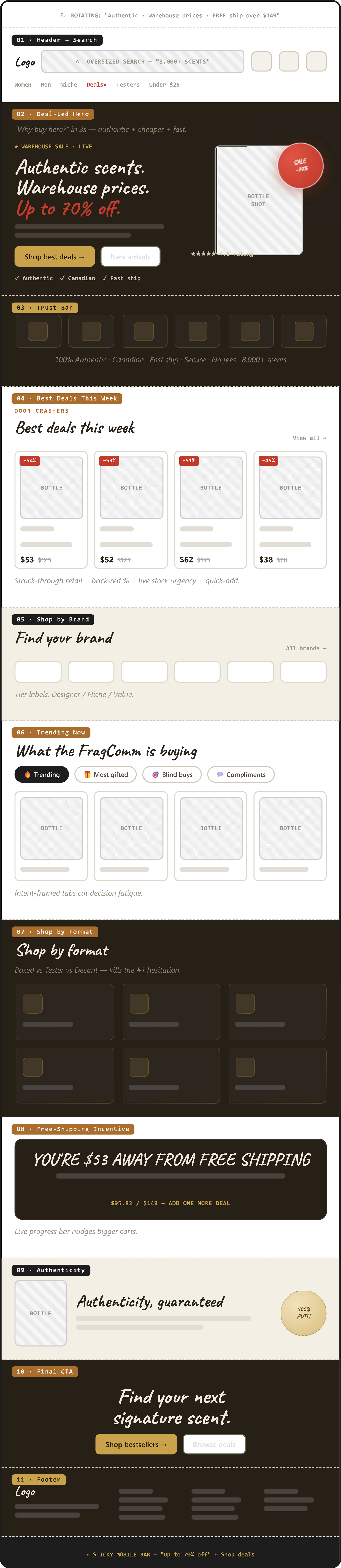
Deal-Led Warehouse Sale
The experience immediately emphasizes discounts, product availability and quick access to popular categories. Search is highly visible, promotional messaging is direct and customers can begin browsing products with minimal friction.
The hypothesis
If most visitors already understand fragrance and arrive with purchase intent, a deal-led homepage should help them find products faster and move toward checkout with fewer distractions.
Prototyope B
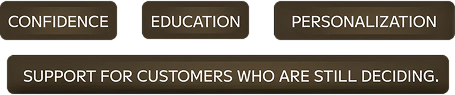
Trust and Discovery
Instead of leading primarily with discounts, the homepage helps customers understand the products, explore scent preferences and feel more comfortable purchasing fragrance online.
The hypothesis
If uncertainty is preventing customers from purchasing, a homepage that provides guidance and reassurance should increase engagement and improve conversion among new visitors.


Key design decisions
Prominent search
Clear warehouse-sale messaging
Deal-focused product collections
Product-type shortcuts
Visible savings
Key design decisions
Trust-led introduction
Find Your Scent navigation
Scent Finder
Beginner-friendly recommendations
Product education
Prototype A vs. Prototype B
The two concepts are intentionally different because they are designed to answer a strategic question.
Prototype A asks:
Can faster access to deals and products increase purchase activity?
Prototype B asks:
Can guidance and reassurance help more customers feel confident enough to buy?
A/B Testing Strategy
Primary success metric: Revenue per visitor
To evaluate the concepts, visitors could be divided between the two homepage experiences.
Both versions would maintain the same core products, pricing and checkout process. The main variable would be how the homepage organizes information and guides customers into the shopping journey.
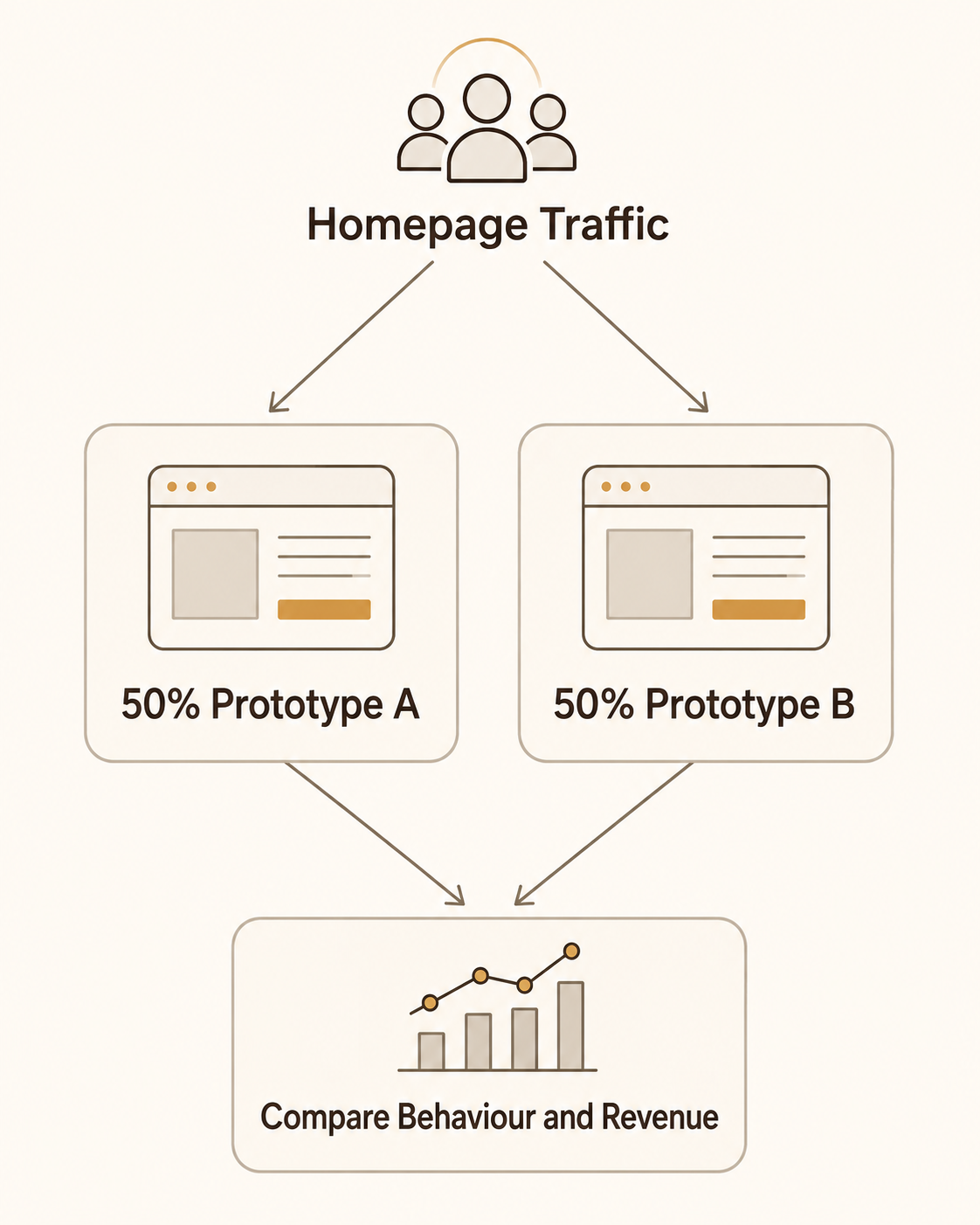
This measures whether each experience contributes to meaningful business results rather than only generating clicks.
Additional Metrics to Track
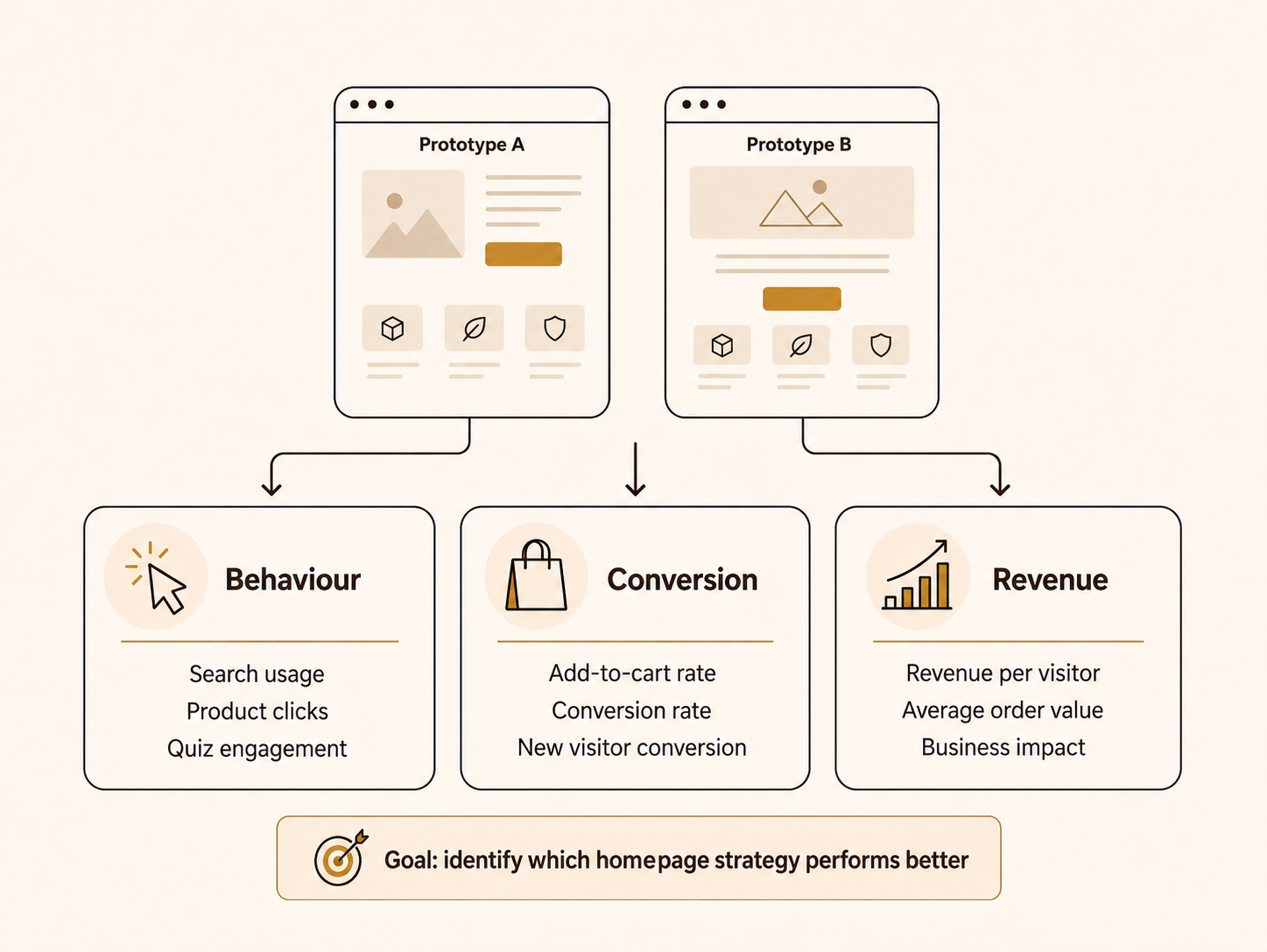
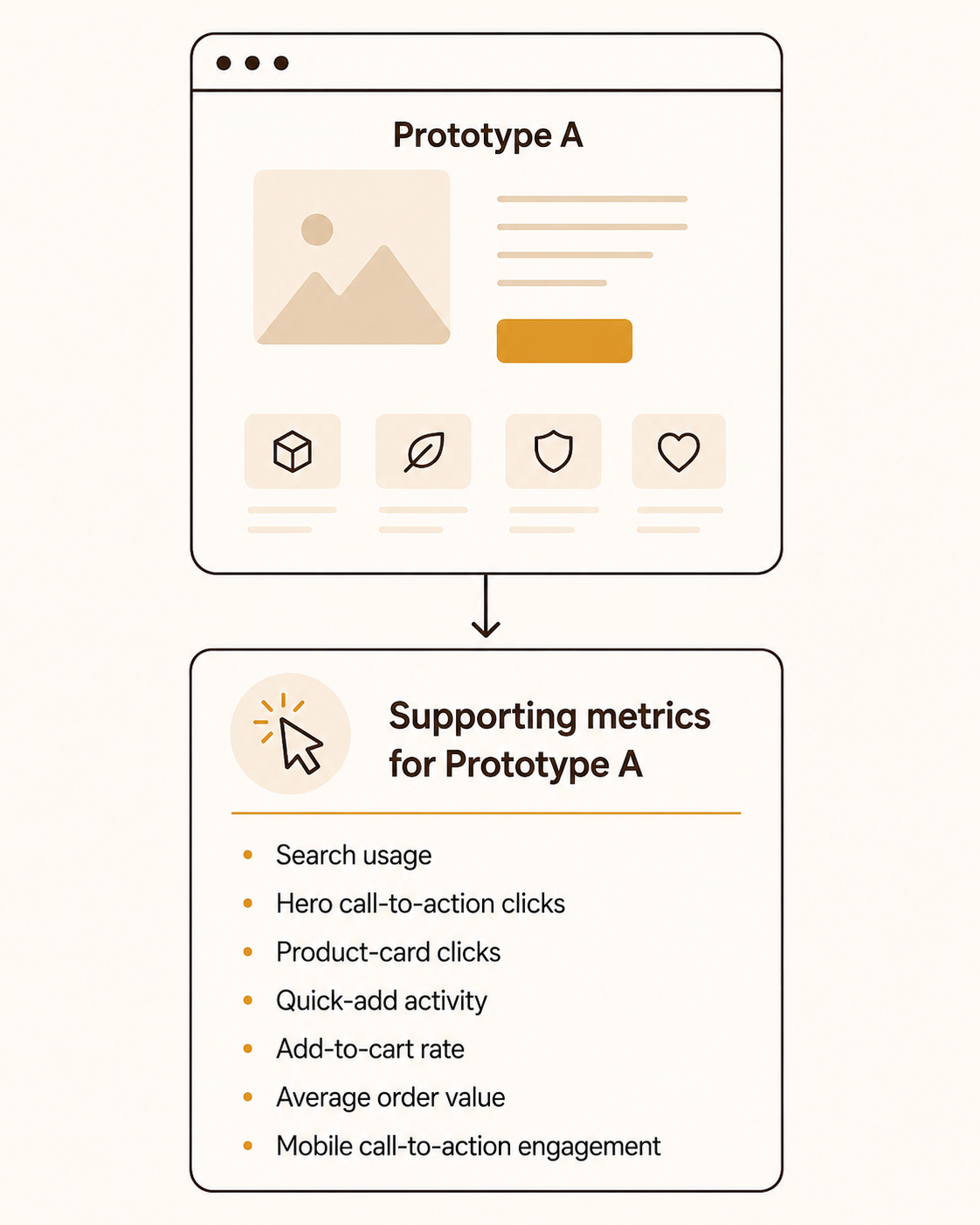
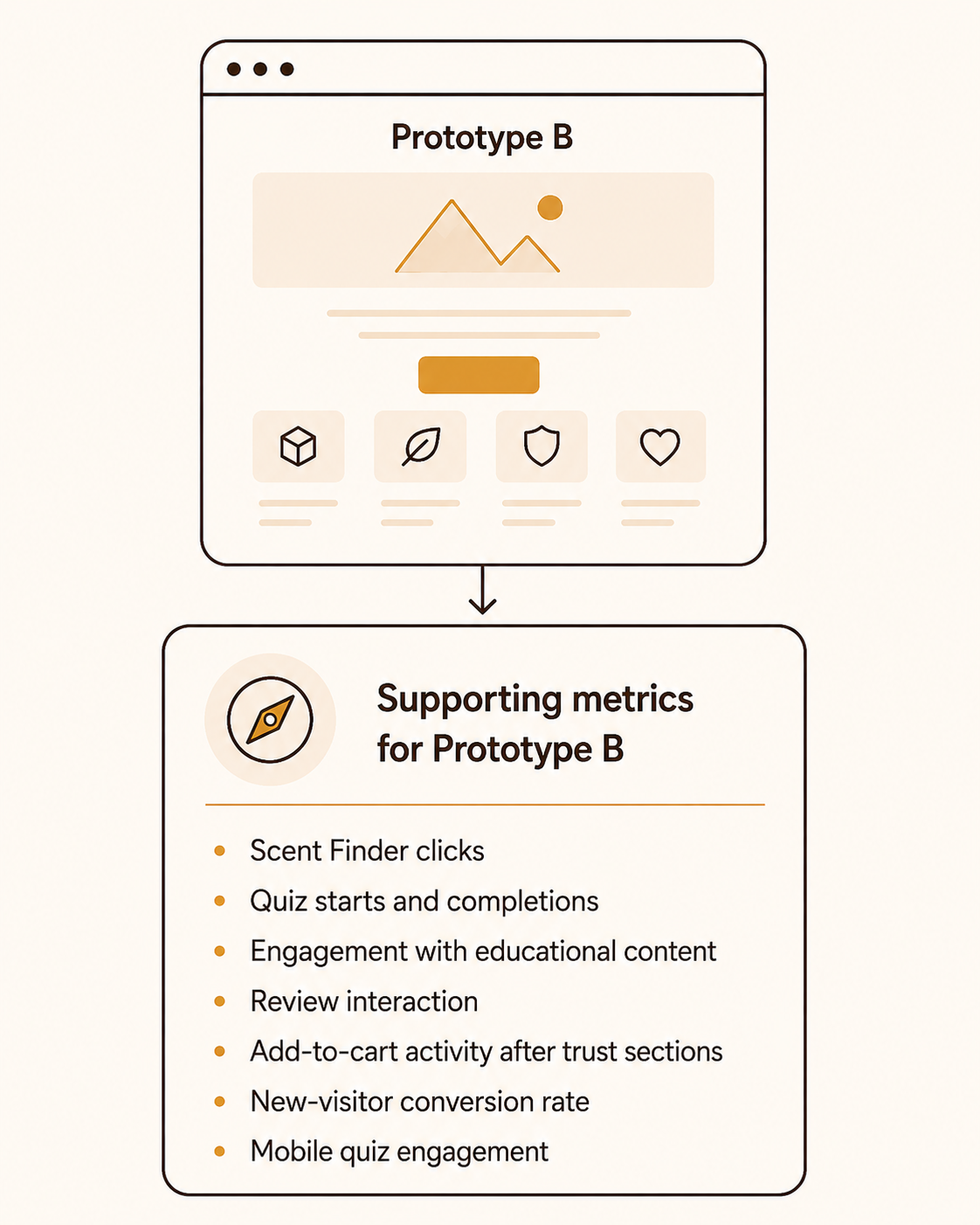

How I Would Interpret the Results?


If Prototype A performs better
Customers may already arrive with strong purchase intent and mainly need efficient access to products, prices and promotions.
The homepage should continue prioritizing search, deals and fast product discovery.
If Prototype B performs better
Customers may require more reassurance and guidance before purchasing fragrance online.
The homepage should invest further in education, personalization and trust-building tools.
If the results are mixed...
The strongest solution may combine the most effective elements from both concepts—for example, maintaining a deal-led hero while introducing discovery tools further down the page.
Final Takeaway
The purpose of this project was not to choose between deals and discovery based on personal preference.
It was to create two testable experiences and use customer behaviour to determine which strategy better supports both the user and the business.
Good ecommerce design does not assume what customers need. It creates a clear hypothesis, measures the response and continues improving from there.